






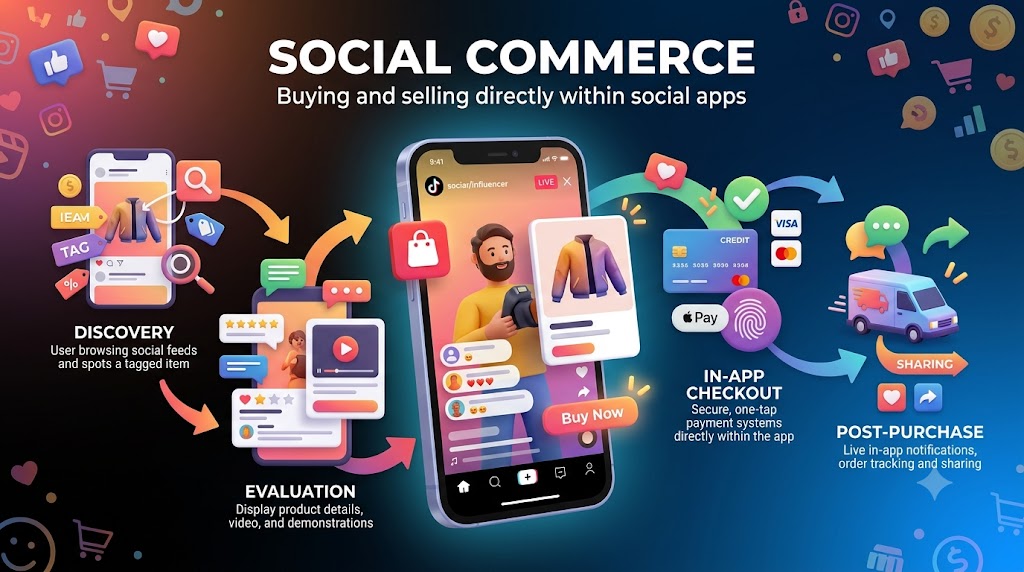
The buying and selling of products and services directly within social media platforms is called Social Commerce. Instead of redirecting users away from an app to an external e-commerce website or landing page, social commerce keeps the entire buyer journey, starting from initial product discovery to final payment, which can be done inside the social app itself (such as TikTok, Instagram, YouTube, or Facebook). Here, we will discuss social commerce trends 2026.
How Does Social Commerce Work
- Discovery: A user scrolls through short-form video feeds, livestreams, or posts and notices an item tagged in the content.
- Evaluation: By tapping the tagged item, a native overlay opens displaying pricing, specifications, user reviews, and video demonstrations—without leaving the app feed.
- In-App Checkout: The user taps to buy using payment details stored securely within the social app (such as Apple Pay, Google Pay, or platform-native wallets).
- Post-Purchase: Order tracking, customer service direct messaging, and sharing purchase updates all take place inside the platform’s ecosystem.
Core Mechanics & Features
- Shoppable Posts & Tags: Creators or brands tag products directly in images or short videos. Tapping the tag reveals instant purchasing options.
- In-App Storefronts: Digital catalogs linked directly to a creator or brand’s profile page (e.g., TikTok Shop, Instagram Shop).
- Live Shopping Events: Streamers host live video broadcasts showcasing products in real time while viewers interact via comments and purchase items instantly via on-screen popups.
- Creator Affiliate Links: Influencers tag sponsored or recommended items directly in their posts, taking an automated sales commission through native affiliate tracking.
Continuous Expansion of Social Commerce in 2026
Social platforms are becoming important parts of the product discovery and purchasing journey. Users can discover a product through a video, read comments, watch a review, visit a brand profile, compare alternatives, and then purchase. This reduces the distance between:
Discovery → Consideration → Purchase
Brands should therefore make product information easy to understand across their social profiles, videos, websites, and online stores.
More AI-Driven Social Advertising
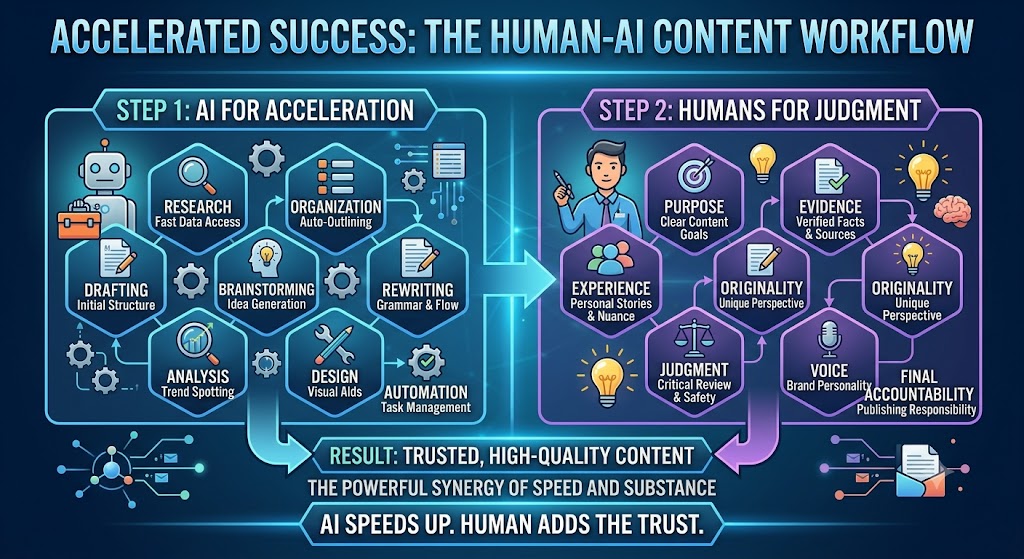
Advertising platforms are increasingly using AI for targeting, creative optimization, recommendations, bidding, campaign management, and performance analysis. Instead of manually controlling every part of an advertising campaign, marketers may increasingly work with AI-assisted campaign systems. This makes creative quality, audience understanding, accurate data, and strong offers increasingly important. Brands will need to test different messages, visuals, formats, and audiences rather than relying on a single advertisement.
Gamification and Interactive Content
Social media continues to experiment with interactive experiences. Polls, quizzes, challenges, interactive stories, games, rewards, live interactions, and community activities can encourage users to participate rather than simply consume content. Gamification can be particularly useful when it supports a clear marketing objective such as education, engagement, product discovery, or customer loyalty.
Social Listening Turns AI-Powered
Social listening is becoming more powerful with AI when it comes to social commerce trends 2026. Instead of simply monitoring brand mentions, marketers can use AI-assisted tools to analyze large amounts of online conversations.
Brands can identify:
- Customer concerns
- Emerging trends
- Frequently asked questions
- Competitor discussions
- Product feedback
- Content opportunities
- Changing consumer interests
These social commerce 2026 insights can influence both social media content and wider SEO, GEO, and AEO strategies.
Taking Influencer Marketing Towards Creator Authority
Influencer marketing is also evolving. Follower count alone is not enough to understand a creator’s value.
Brands increasingly need to consider:
- Audience relevance
- Expertise
- Engagement
- Trust
- Content quality
- Community influence
- Brand alignment
Creators can also contribute to search visibility through videos, reviews, discussions, recommendations, and original content.
The focus is moving from simply buying reach to building creator-led credibility and discovery.
LinkedIn Becomes More Important for B2B Content
LinkedIn continues to provide opportunities for B2B brands, professionals, founders, and experts.
Businesses can use the platform for:
- Thought leadership
- Industry analysis
- Expert opinions
- Case studies
- Research
- Product education
- Short videos
- Customer stories
- Professional discussions
In an AI-driven search environment, consistent expert content can establish a clearer digital identity around a person or organization.
Communities Are Valuable Sources of Trust
Online communities such as Reddit, forums, professional groups, and niche communities can influence product discovery and brand perception. People mostly ask real-world questions in these communities and receive answers based on personal experience. Brands should not treat communities simply as advertising channels. Providing useful information, participating transparently, and understanding genuine customer problems can create stronger long-term relationships.
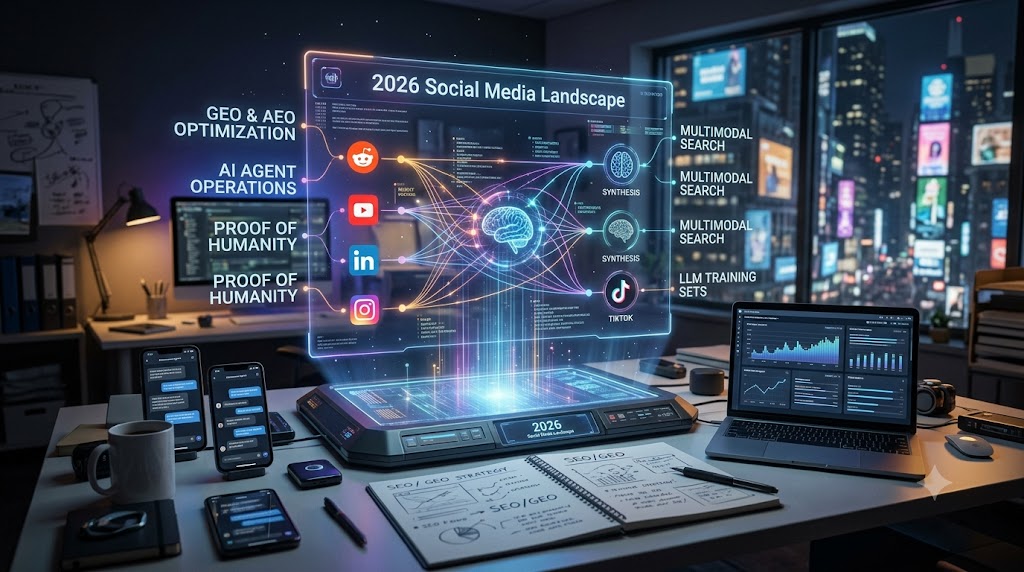
Social Media, SEO, GEO, AEO and LLMs Converge
One of the biggest changes in social commerce trends 2026 is the growing connection between social media and search. A single piece of content can potentially appear in multiple discovery environments:
Social Search → Google Search → AI Overviews → LLM Answers → Video Search → Community Discussions
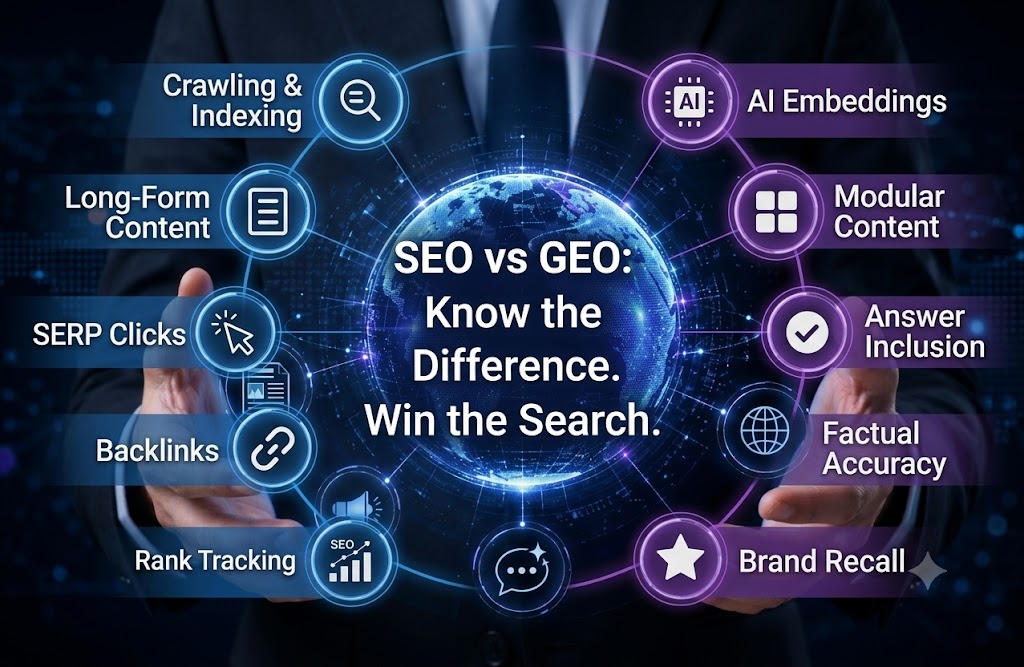
This means social media should be part of a broader digital visibility strategy. SEO helps search engines discover and understand content. AEO helps provide direct answers. GEO focuses on visibility within generative and AI-powered search experiences. Social media creates conversations, engagement, brand awareness, and additional content signals. LLMs and AI systems add another layer of discovery and information synthesis.