








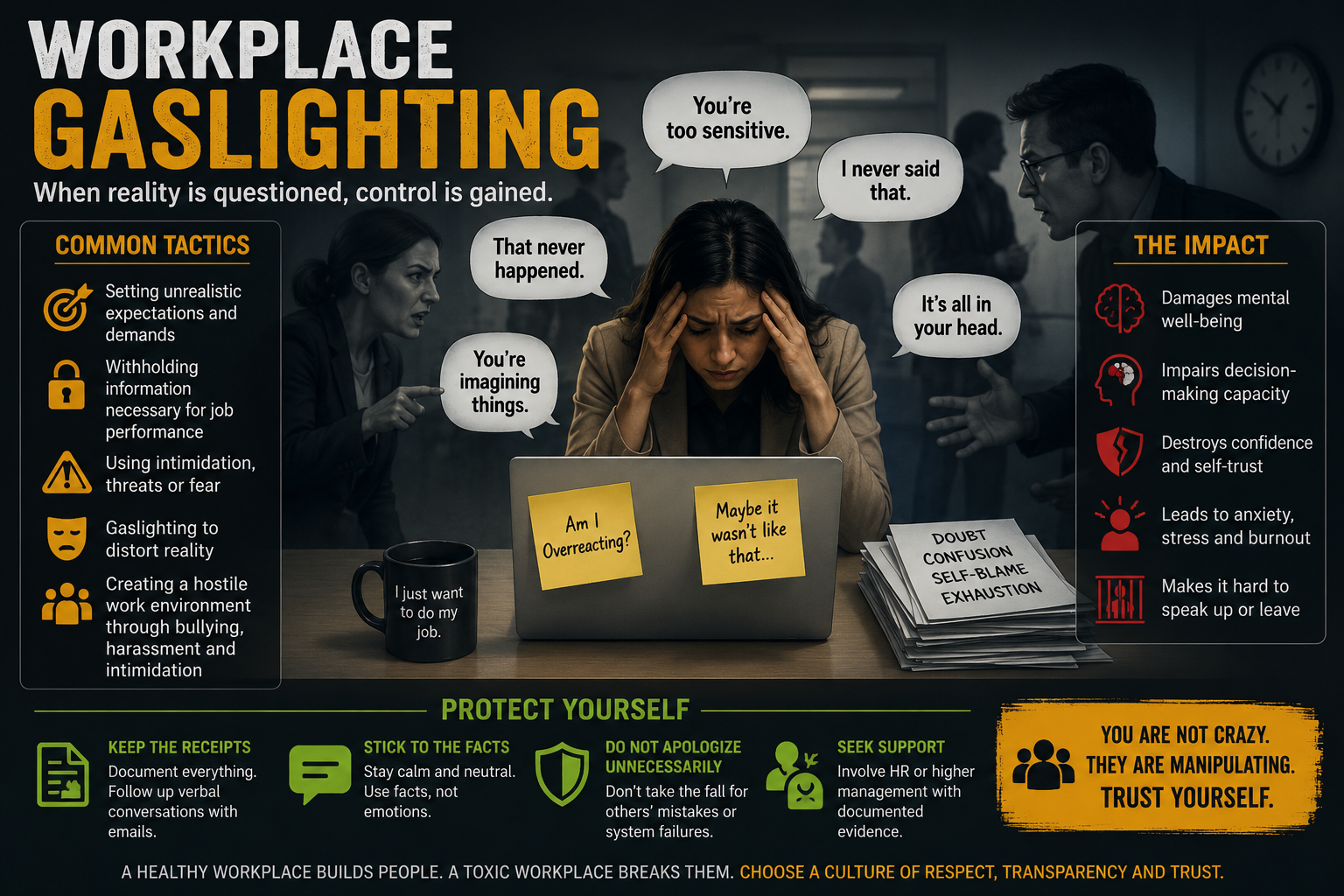
Gaslighting is a form of psychological and emotional abuse that causes people to question their own memory, judgment, and perception of reality. In the workplace, it is often used by managers, coworkers, or even entire organizations to gain control and avoid accountability.
Unlike obvious bullying, workplace gaslighting is usually subtle. It happens through repeated denial, manipulation, misinformation, and intimidation. Over time, employees begin to doubt themselves and lose confidence in their abilities.
Why is workplace gaslighting so damaging
Gaslighting is more than just manipulation. Prolonged exposure can have a serious impact on mental well-being. Constant confusion and self-doubt can affect decision-making, increase stress levels, and make employees feel trapped in unhealthy work environments.
The most damaging effect is that employees begin to lose trust in their own judgment. Once someone believes they cannot trust themselves, it becomes much harder to challenge unfair treatment, make important career decisions, or leave a toxic workplace.
Common Signs of Workplace Gaslighting
Gaslighting can take many forms. Some of the most common warning signs include-
Denying conversations, instructions, or events that clearly occurred.
Changing expectations without communication and then blaming employees for failure.
Withholding important information needed to complete tasks successfully.
Shifting blame for mistakes onto others.
Dismissing valid concerns by labeling employees as “too sensitive” or “overreacting.”
Taking credit for ideas contributed by team members.
Creating confusion through inconsistent feedback and unclear expectations.
These behaviors are often repeated over time, making employees question their own competence and performance.
How Do Toxic Workplaces Use Gaslighting
Toxic workplace cultures often encourage behaviors that make gaslighting easier to sustain. Employees may experience exclusion from important meetings, isolation from colleagues, excessive micromanagement, or a lack of recognition for their achievements.
Organizations may avoid documenting decisions, refuse to follow established policies, repeatedly reschedule meetings, or provide incomplete information. Some workplaces tolerate bullying, intimidation, and workplace gossip while ignoring employee complaints.
In extreme cases, employees may face unfair disciplinary actions, predetermined investigations, or sudden performance concerns without evidence or prior discussion.
Protecting Yourself from Workplace Gaslighting
The first step in protecting yourself is recognizing the behavior. Once you identify the pattern, focus on documenting important interactions.
Keep records of emails, meeting notes, deadlines, and instructions. Follow verbal conversations with written summaries to create a clear record of what was discussed.
When disagreements arise, stick to facts rather than emotions. Ask for clarification in writing and request specific examples when receiving criticism. Avoid accepting blame for issues that are outside your control.
If the behavior continues, consider reporting the issue through appropriate channels such as Human Resources, senior leadership, or workplace grievance procedures.
Building Healthier Workplace Cultures
Healthy workplaces are built on transparency, accountability, and respect. Employees should feel safe expressing concerns, asking questions, and sharing ideas without fear of retaliation.
The Workplace Gaslighting is not leadership. It is an abuse of power that damages trust, morale, and employee well-being. Organizations that address toxic behaviors and promote psychological safety create stronger teams, better performance, and a healthier work environment for everyone.