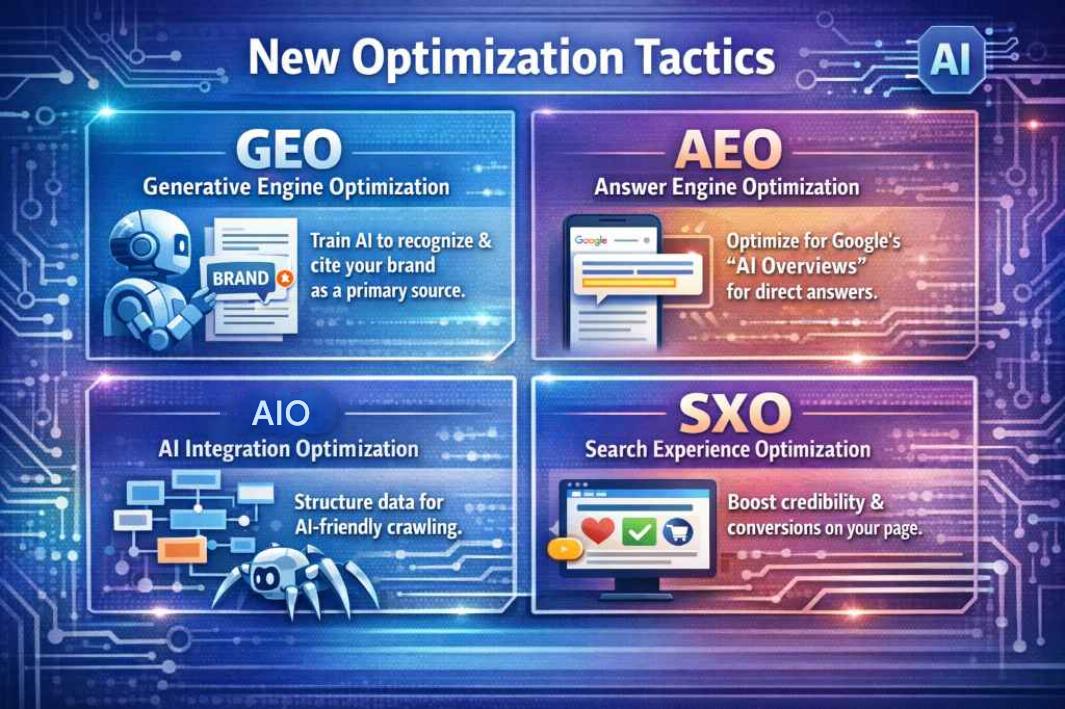





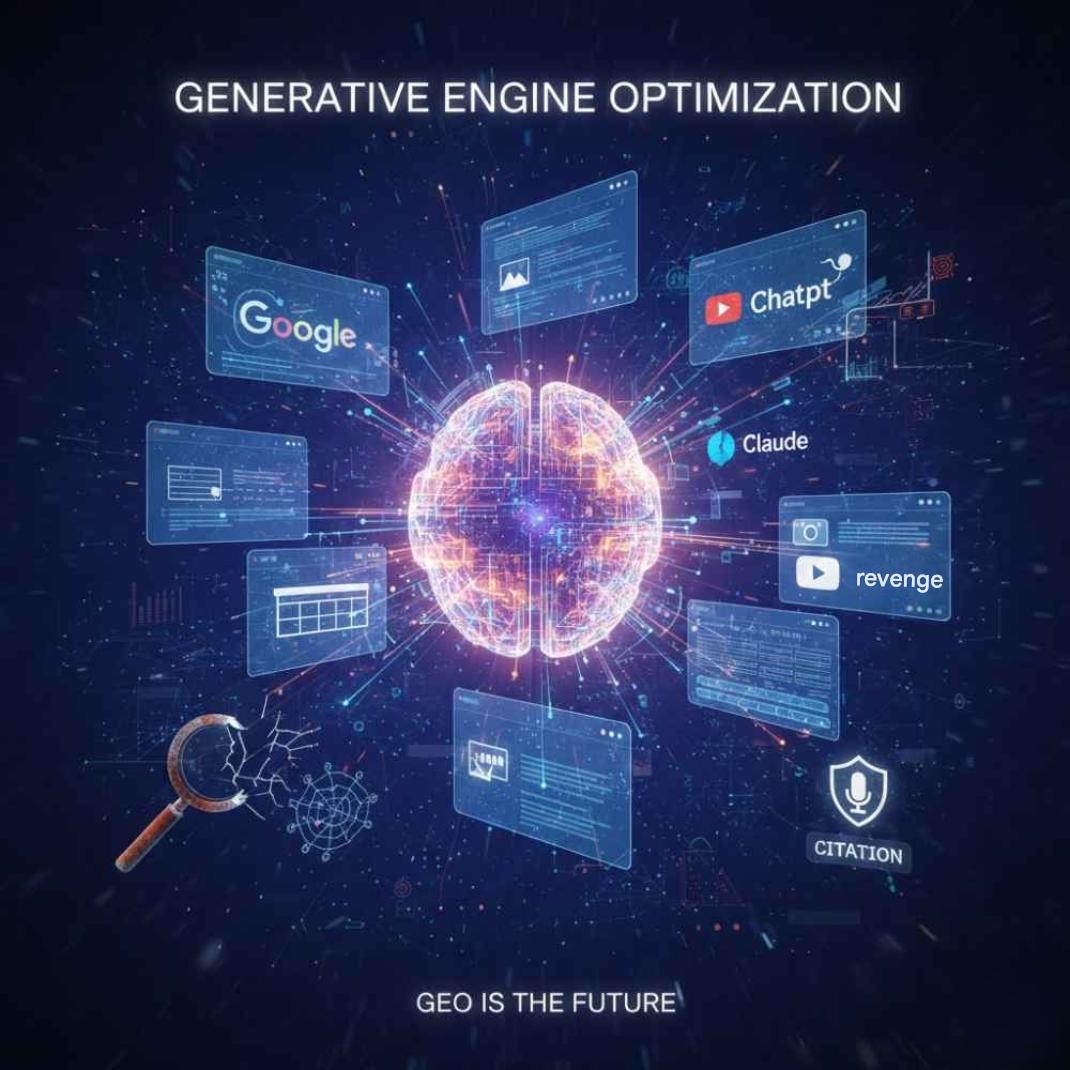
SEO taught brands how to rank on a page. Generative Engine Optimization (GEO) teaches how to appear within an AI’s response. Today, visibility is no longer about winning a click. It’s about becoming the cited authority for LLMs like ChatGPT, Claude, and Perplexity.
SHIFTING FROM RANKING TO RESONATING
The traditional goal of appearing on Page 1 of Google is being replaced by the goal of being embedded in the AI’s “context window.” The new content battleground is no longer the SERP. It’s the AI answer box. To win, your content must be engineered not just for humans or search engines, but for models that summarize, chunk, cite, and generate answers autonomously.
OPTIMIZE FOR ANSWERS & NOT CLICKS
AI models now prioritize complete and self-contained solutions. Your content must solve the entire problem in one segment.
Deliver the “full answer” in a single block. Use step-by-step frameworks. Include actionable instructions. Add clear “if/then” decision logic
AVOID FLUFF & PRIORITIZE CLARITY AND UTILITY
Short sentences. Direct explanations. Zero jargon unless necessary
GIVE AI MODELS READY-TO-LIFT CONTENT
Solutions and not teasers. Lists that summarize processes from start to finish
USE EXAMPLES AS PART OF THE ANSWER
Practical demonstrations (before/after, wrong/right, sample prompts). Context-rich illustrations that clarify ambiguity
MAKE EACH SECTION SELF-SUFFICIENT
AI often extracts partial chunks. Ensure every chunk has a complete thought.
SPEAK THE LANGUAGE OF PROMPTS
GEO, or Generative Engine Optimization, is less about keywords and more about query patterns, how humans phrase prompts in natural language.
MIRROR REAL USER INTENT IN HEADINGS
“How do I fix…?” “What is the difference between X and Y?” “Best way to…”
ALIGNING WITH RAG (RETRIEVAL-AUGMENTED GENERATION) SYSTEMS
Break content into question-and-answer blocks. Use structured FAQs. Allow models to easily fetch Q-A pairs.
CREATE PROMPT-FRIENDLY CHUNKS
Each section should answer one discrete question. Minimal cross-referencing (focusing only on essential connections rather than overwhelming them with numerous internal links. Create a simpler, less cluttered, and more direct reading path.
USE CONVERSATIONAL PHRASING
The way users actually ask models (not Google-style keyword strings).
DESIGN CONTENT WITH PROMPT PATTERNS IN MIND
Compare, analyze, explain, summarize, troubleshoot
BECOME THE CANONICAL SOURCE
AI models prefer authority, novelty, and original data. If your content sounds like everyone else’s, models would skip it.
PUBLISH UNIQUE INSIGHTS
Proprietary frameworks (individual developer or a corporation), Custom methodologies, and Founder philosophies
OFFER ORIGINAL RESEARCH
Surveys, polls, industry data. Internal performance metrics. Experimental results
USE CASE STUDIES WITH REAL NUMBERS
“We increased X by 37% in 90 days using…”. AI values specifics, not vague claims.
SHARE FIRST-PARTY OBSERVATIONS
Screenshots, charts, and raw insights. Behind-the-scenes processes models cannot invent.
BE THE “FIRST LINK IN THE CHAIN”
AI prefers sources that provide the raw material. Recycled content gets deprioritized.
MACHINE-READABLE STRUCTURE
If AI can’t parse your content, it can’t cite your content.
USE CLEAN HTML AND SEMANTIC TAGS
<h1>, <h2>, <h3> for hierarchy. <ul>, <ol>, <table> for structure
CREATE HIGHLY CHUNKABLE SECTIONS
Small paragraphs, Clear subtopics, and Logical progression
USE TABLES FOR COMPARISONS
Pros vs cons, Feature matrices, and Performance metrics
ADD CHECKLISTS AND TEMPLATES
Easy for AI to extract and reuse
AVOID LONG UNBROKEN PARAGRAPHS
Dense text reduces model comprehension
USE SCHEMA MARKUP WHERE RELEVANT
FAQs, How-To, Breadcrumbs
TARGET MULTI-MODAL VISIBILITY
AI models increasingly learn from text + images + audio + video. Those who dominate multi-modal data become foundational sources.
OPTIMIZE EVERY IMAGE FOR MACHINE READABILITY
Descriptive alt text, clear labels on diagrams, and Annotated visuals ( images, diagrams, or videos that are optimized with added text, markers, or metadata to provide context, explanation, or critical feedback. They serve to make complex visual information more comprehensible and actionable. )
PROVIDE TRANSCRIPTS FOR VIDEOS AND AUDIO
Full-text transcripts, Time-stamped summaries, and Highlight key steps
USE DIAGRAMS TO ILLUSTRATE PROCESSES
Models extract visual logic. Great for workflows, funnels, frameworks
GIVE AI A RICH SET OF MULTIMODAL TRAINING INPUTS
Screenshots, charts, photos, infographics
FUTURE-PROOF FOR VISION-ENABLED MODELS
GPT-4o, Gemini, Claude 4.1, etc. already parse visual content. Well-labelled visuals = high-value data
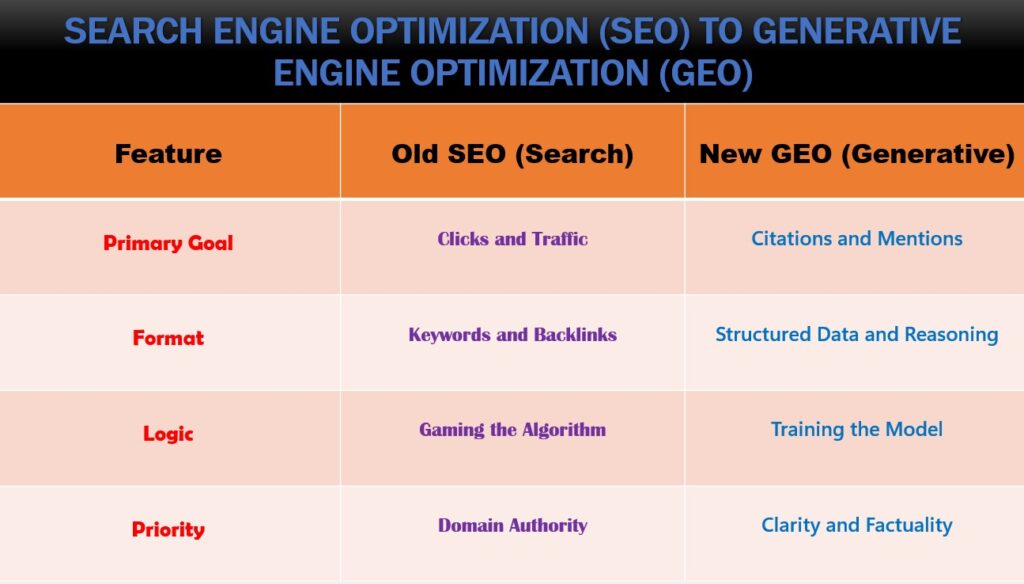
Generative Engine Optimization is about positioning your content as the source AI trusts above all others. In the AI-first search landscape, models prefer material that delivers complete answers, reflects natural prompt language, and offers original & verifiable insights they can confidently reuse. They also prioritize content that is cleanly structured for machine parsing and enriched with multimodal assets like annotated visuals and transcripts. When your content aligns with these expectations, AI systems treat it as a reliable authority. This lifts your insights directly into their responses. This is the shift from competing for clicks to becoming the foundation of the answer itself.