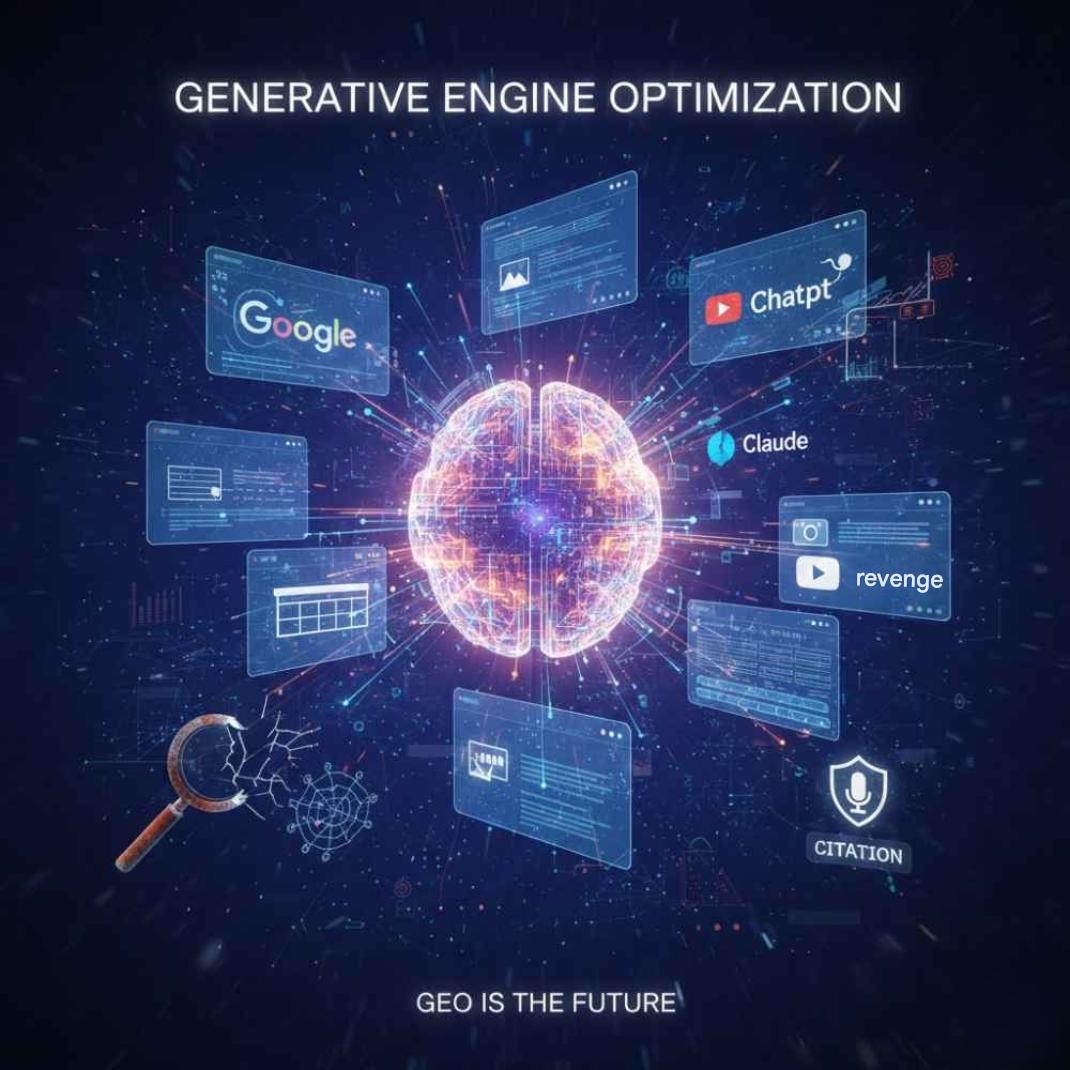








Google is no longer the only place people go to find answers. Today, the way customers discover solutions is fragmented. They ask ChatGPT for advice, watch YouTube for tutorials, and check LinkedIn to find experts. To stay relevant, brands must move beyond a single platform. This strategy is called Search Everywhere Optimization and Multimodal Search.
AI and Traditional Search
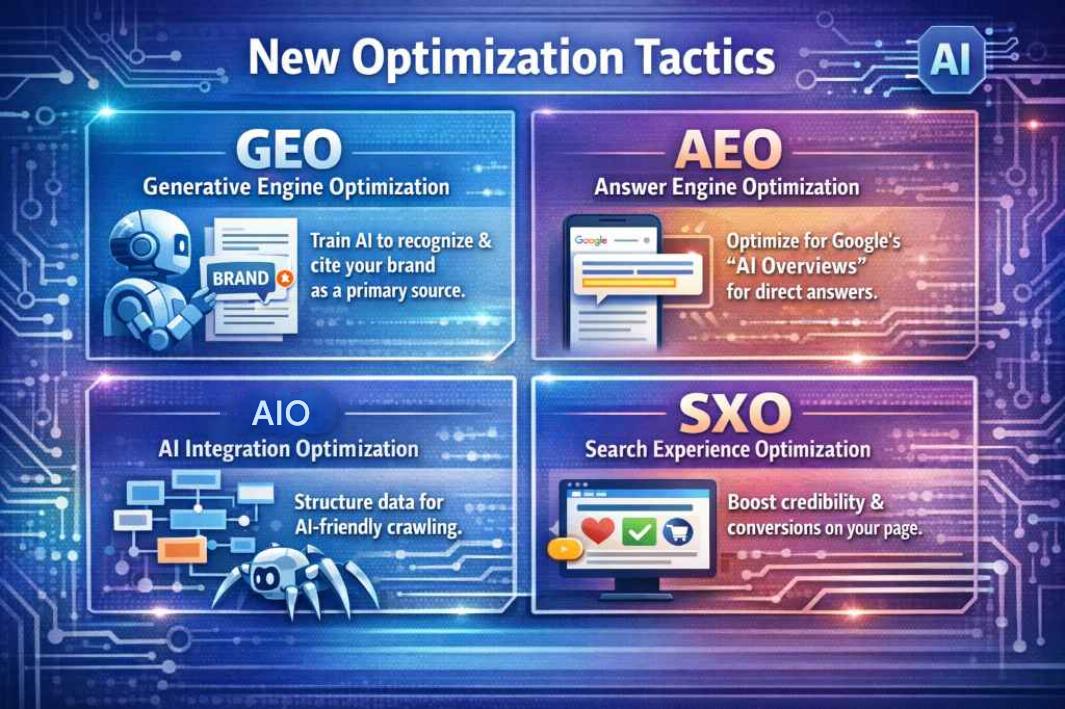
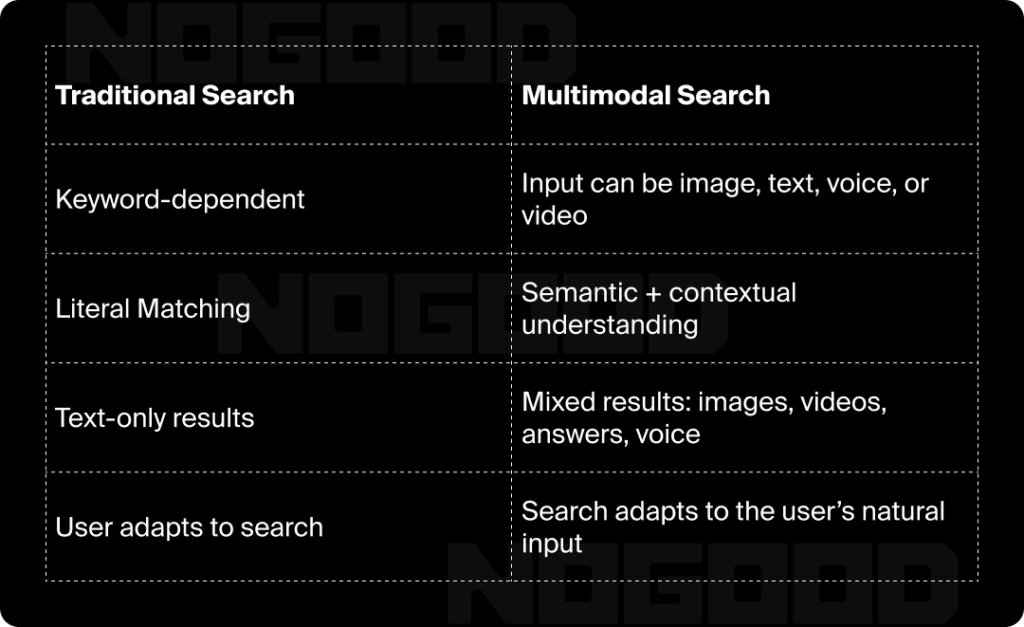
AI search engines like ChatGPT, Perplexity, and Claude handle billions of queries every day. To show up here, your content must be structured with clear definitions and proven expertise. At the same time, traditional search engines like Google and Bing still drive massive traffic. The goal is to answer conversational questions and capture “featured snippets” that are helpful boxes at the top of the search results.
Social and Video Platforms
Social media platforms like LinkedIn, TikTok, and Instagram have become discovery engines. People don’t just “scroll” anymore, but they search for advice and trends. Brands should participate in genuine conversations and share original insights. Video is even more powerful. Platforms like YouTube and TikTok dominate how people learn. You can adapt your written articles into video formats. Use searchable titles and “hooks” to grab attention quickly.
Marketplaces and Local Discovery
If you sell products, you must optimize for Amazon and Etsy. These sites have their own ranking systems. Focus on high-quality product pages and encourage customer reviews. For physical businesses, local search is key. Ensure your name, address, and phone number are the same across all maps and directories to drive foot traffic.
What is Multimodal AI
As search behavior changes, the technology behind it is also evolving. The most important shift is the rise of Multimodal Search or Multimodal Large Language Models (LLMs).
What is Multimodality or Multimodal Search?
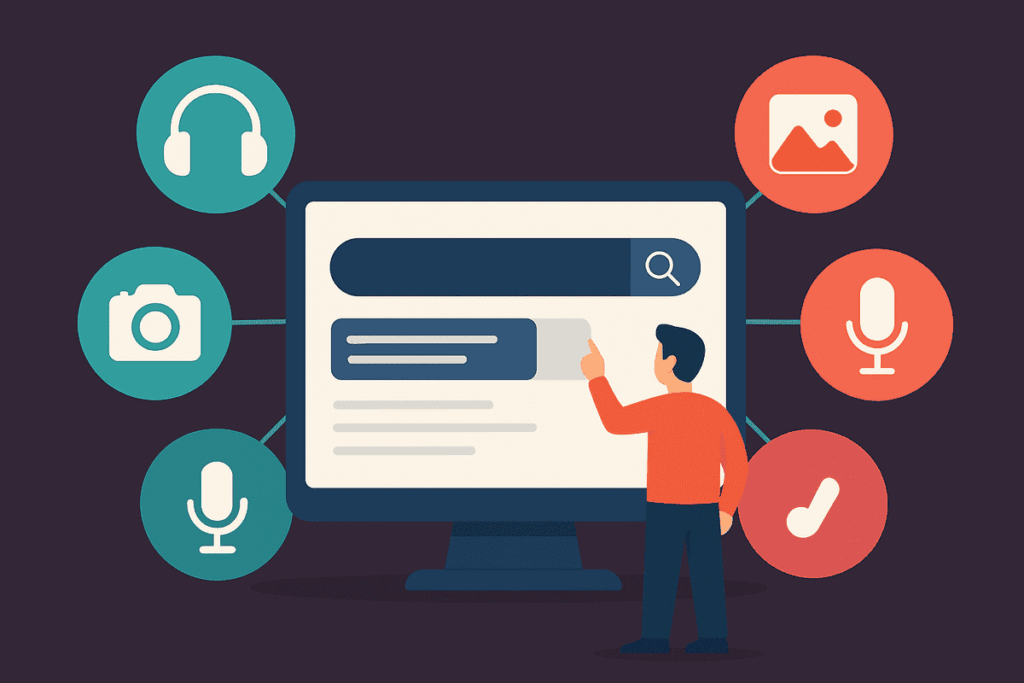
Most early AI models could only understand text. Multimodal AI can process many types of data at once, including:
- Text and Code
- Images and Diagrams
- Audio and Speech
- Video
Humans naturally learn by seeing, hearing, and reading all at once. Multimodal AI bridges the gap between language and perception, allowing machines to understand the world more like we do.
How Multimodal AI Works
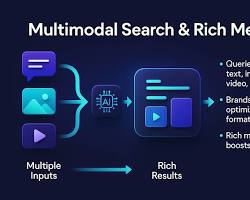
This technology uses a three-part system to “think”-
Encoders
Each type of data (like an image or a voice clip) has its own translator that turns information into a digital code.
Shared Space
All these codes are moved into a single “room” where the AI can see how they relate. For example, it connects the word “dog” to a picture of a golden retriever.
Fusion
The AI combines these signals to reason. It can look at a video of someone speaking and use both the sound of their voice and their facial expressions to understand their mood.
Real-World Benefits for Business
Multimodal AI isn’t just a lab experiment. It is already changing how businesses operate, especially through tools like Azure AI Search.
Finding Hidden Information
Many companies have valuable data hidden in charts, screenshots, and infographics. Traditional search tools often miss this. Multimodal search can “read” a diagram inside a PDF. If a customer asks, “How do I approve this form?” the AI can find the answer, even if it is only shown in a visual flowchart.
Smarter AI Agents
A multimodal AI agent is an advanced system that can perceive, comprehend, and respond. Unlike basic chatbots, these agents can-
- Analyze Healthcare Data– Combine an MRI image with a doctor’s written notes for a better diagnosis.
- Improve E-commerce– Recommend products based on a photo a customer uploads.
- Assist Drivers – Use cameras and voice commands to make navigation safer.
A Strategy for Leadership
For business leaders, the lesson is clear
AI value grows when you link different types of data together. Many executives struggle because they try to use AI tools in isolation. The real “superpower” comes from building systems that can see the whole picture. To win in the modern market, your brand must be visible wherever customers look, whether they are typing a query, speaking to a voice assistant, or uploading a photo.